


Asteroid 1997 NC1 Passes Earth Today
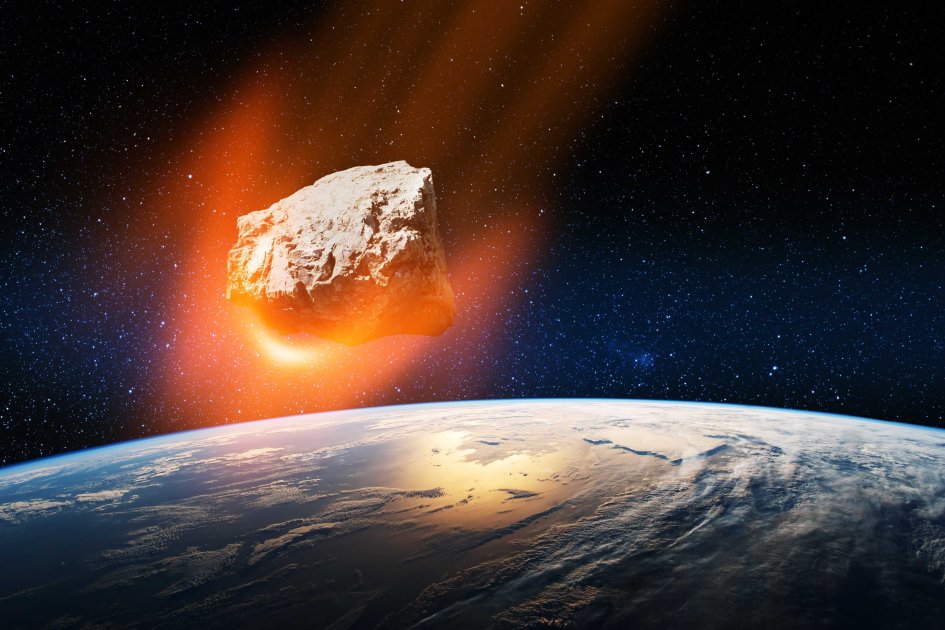
Today, Saturday, June 27, 2026, asteroid 1997 NC1 will come close enough to Earth to be visible to the naked eye. According to the European Space Agency (ESA), the asteroid will reach its closest point to Earth at 1:14 PM German time, at a distance of 2.56 million kilometers. The asteroid is estimated to have a diameter of 750 to 1650 meters and was first discovered on July 5, 1997.
Traveling at a speed of nearly 32,000 km/h, it will pass Earth at a distance approximately 6.6 times that between Earth and the Moon. The ESA has emphasized that there is no risk of impact. Impacts from asteroids of this size are extremely rare, and the potential damage would be significant. Historically, larger asteroids that have struck Earth have had substantial effects on the environment and life on our planet. For those interested in observing the asteroid, a small telescope or a strong pair of binoculars is recommended.
However, the asteroid will only be visible from the Northern Hemisphere. The brightness of the Moon may hinder visibility of the asteroid, as it will be near the Moon. Such close approaches by asteroids are rare. According to the ESA, this occurs only every few years. A recent example of a close flyby is asteroid 2024 YR4, which was originally expected to pass Earth and the Moon but ultimately passed both by.
Observing asteroids provides scientists with valuable data about the composition and behavior of these celestial bodies. The ESA and other space agencies use such opportunities to learn more about the dynamics of the solar system and to identify potential future threats. The next opportunity to observe an asteroid of this size may not occur for several years. The ESA plans to continue monitoring such events in the future and to inform the public about upcoming flybys. Asteroids like 1997 NC1 are not only of scientific interest but also significant for planetary protection strategies developed to safeguard Earth from potential hazards.
Monitoring these objects is a crucial part of space research. The ESA will continue to collect and analyze data on the asteroid to gain a better understanding of its orbit and physical properties. Such information is essential for developing defense strategies against possible future threats from asteroids. Observations of asteroid 1997 NC1 are supported by various astronomical institutions worldwide, which are providing their telescopes and resources to document the visibility and characteristics of the asteroid. The next opportunity to observe a similar celestial event is expected to occur in the coming years, with exact dates yet to be announced.





💬 Comments (0)
No comments yet. Be the first to comment!