


China's Tianwen-2 Delivers First Images of Mini-Moon
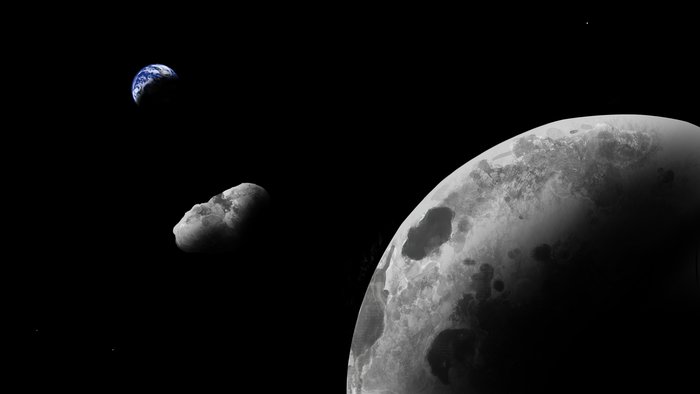
The Chinese space probe Tianwen-2 has successfully transmitted its first image data of asteroid 2016 HO3. This celestial body is one of the few objects known as quasi-satellites that accompany Earth in a stable orbit around the Sun. The mission aims to investigate the characteristics and composition of this mini-moon in greater detail. Discovered in 2016, 2016 HO3 is one of only seven known quasi-satellites of Earth. It orbits Earth at a distance of approximately 38,000 kilometers and has a diameter of about 40 meters.
These unique characteristics make it an interesting target for scientific investigations. The Tianwen-2 mission was launched with the goal of learning more about the composition and geological features of 2016 HO3. The first images reveal a variety of surface features that could indicate the geological activity of the asteroid. Scientists are analyzing the data to draw conclusions about the formation and evolution of such celestial bodies. The mission is part of China's ambitious space program, which aims to advance the exploration of space.
Tianwen-2 is a continuation of the Tianwen-1 mission, which successfully reached Mars and collected data there. The Chinese space agency plans to launch further missions in the coming years to expand knowledge about the solar system. The first image data from 2016 HO3 was transmitted on July 5, 2026. These images are part of a comprehensive dataset that will be collected throughout the mission.
The probe will continue to collect data and transmit it to Earth to obtain a complete picture of the asteroid. The analysis of the image data could also provide important information about the potential use of asteroids for future space missions. Scientists are investigating whether such celestial bodies could serve as resources for raw materials or as waypoints for manned missions to Mars or beyond. The Tianwen-2 mission is expected to last several months, with the probe continuing to operate near 2016 HO3. The data collected will be significant not only for the scientific community but also for the development of future technologies in space exploration.
The Chinese space agency has already announced that the next steps of the mission will include conducting more detailed analyses of the surface features and chemical composition of the asteroid. This information could be crucial for better understanding the history and dynamics of quasi-satellites. The mission represents another step in China's efforts to take a leading role in the international space community. The successes of the Tianwen-1 and Tianwen-2 missions have sparked interest in further space projects in China. The next image data from 2016 HO3 is expected in the coming weeks as the probe continues to stabilize its orbit around the asteroid.
Scientists are optimistic that the collected data will provide new insights into the formation and evolution of quasi-satellites. The Tianwen-2 mission is a significant step in the exploration of asteroids and their role in the solar system. The data collected could also be relevant for future missions focused on resource utilization in space. The Chinese space agency plans to continue the mission until the end of 2026 to gather and analyze comprehensive data on 2016 HO3.




💬 Comments (0)
No comments yet. Be the first to comment!