


Growth of the AI Job Market in Germany
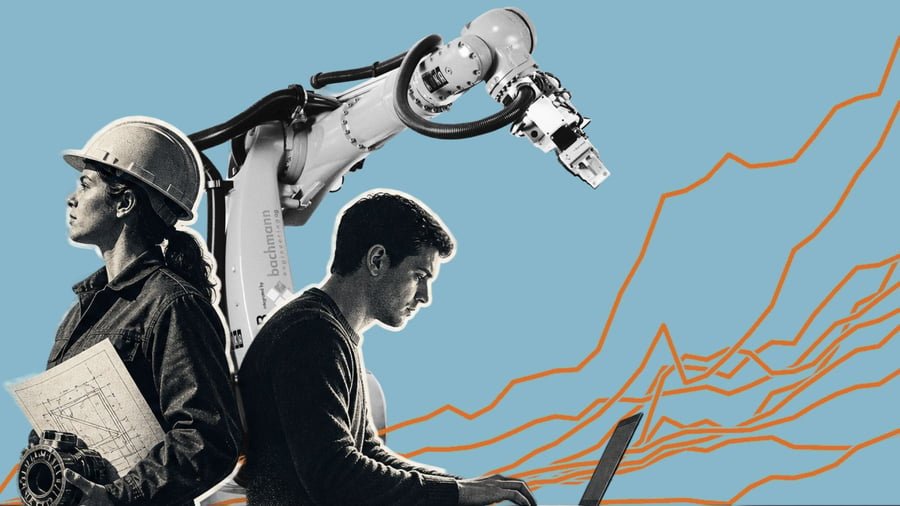
The job market for Artificial Intelligence (AI) in Germany presents a paradox: while the number of job postings in many sectors is decreasing, the demand for AI experts is steadily increasing. Companies face the challenge of finding suitable professionals to successfully implement the national AI strategy. According to recent reports, Germany is already short of over 100,000 skilled workers in the field of AI. A key area where AI knowledge is particularly in demand is software development. Companies are looking for developers who not only possess programming skills but also have a deep understanding of machine learning and data analysis.
The demand for such professionals has increased by 30% in recent years, underscoring the urgency to recruit suitable talent. Another growing sector is research. Universities and research institutes increasingly require experts who can develop innovative AI solutions. These institutions often offer attractive research projects that deal with the latest developments in AI technology. The number of research positions in this area has risen by 15% compared to the previous year.
In addition to technical skills, soft skills such as teamwork and communication are also in demand. Companies are looking for employees who can convey complex technical concepts in an understandable manner. These skills are crucial for successfully leading interdisciplinary teams and efficiently implementing projects. The industry is also showing a growing interest in AI applications. Companies in the automotive, healthcare, and financial services sectors are heavily investing in AI technologies.
These industries require professionals who not only master the technology but also understand the specific requirements of their sector. The demand for AI experts in the automotive industry has doubled in the last two years. The federal government has recognized that training AI professionals plays a central role in Germany's competitiveness. As part of the national AI strategy, programs have been launched aimed at promoting education in this field. The goal is to train an additional 250,000 skilled workers by 2030 to meet the growing demands.
However, the challenges in the AI job market are not limited to education. Many companies report difficulties in finding suitable candidates who possess both the required technical skills and practical experience. This leads to many positions remaining unfilled, which can impair the innovation capacity of companies. Some companies have begun to develop their own training programs to bridge the gap. These programs offer internships and training to identify and nurture talent early on.
Such initiatives could help reduce the gap between supply and demand in the AI job market. The development of AI technologies is also being driven by the increasing number of start-ups offering innovative solutions. These start-ups often seek creative minds willing to pursue new approaches. The number of start-ups in the AI sector has doubled in the last three years, highlighting the dynamism and growth potential of this sector.
The challenges and opportunities in the AI job market are diverse. Companies must adapt and find innovative ways to attract the skilled professionals they need. The coming years will be crucial in setting the course for the successful implementation of the AI strategy. According to a recent survey, 65% of companies plan to increase their investments in AI by the end of 2026.






💬 Comments (0)
No comments yet. Be the first to comment!