


NASA Launches Naming Campaign for Titan Mission
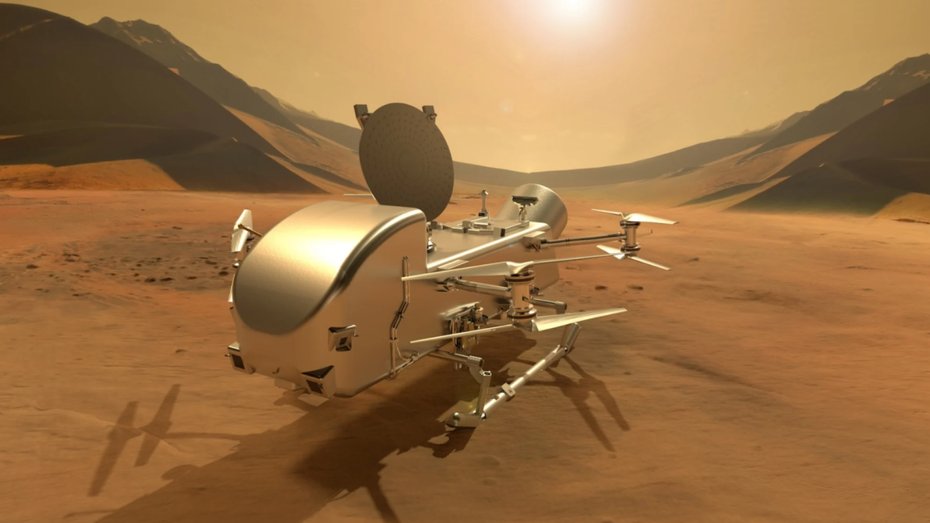
NASA has launched an innovative campaign to engage the public in the upcoming Dragonfly mission to Saturn's moon Titan. Interested individuals can leave their names on one of the drones that are set to land on Titan in 2034. This initiative aims to foster interest in the mission and actively involve people in the space exploration process. The Dragonfly mission, scheduled to launch in 2027, will utilize a novel quadcopter-like drone to explore the surface of Titan. Titan is Saturn's largest moon, characterized by a dense atmosphere and liquid methane lakes.
The mission will enable scientists to investigate the chemical processes on Titan and search for potential signs of extraterrestrial life. The opportunity to immortalize one's name on the drone is part of a broader strategy by NASA to increase public interest in space exploration. This campaign serves not only as a marketing tool but also as a means to emotionally connect people with the mission. Participants can submit their names through the official NASA website, where they can also find information about the mission. The Dragonfly drone will be equipped with various scientific instruments, including cameras and spectrometers, to analyze the chemical composition of Titan's surface.
These instruments will allow scientists to collect detailed data on the geological and atmospheric conditions on Titan. The mission is expected to last several years and could provide crucial insights into the possibility of life on other celestial bodies. NASA plans to land the Dragonfly drone in multiple regions of Titan to investigate different environments. These regions include both the methane lakes and the icy surfaces that are characteristic of Titan's geological processes. The data collected could not only expand our understanding of Titan but also provide insights into the development of life forms in extreme environments.
The naming campaign is not the first of its kind. NASA has previously conducted similar programs during earlier missions, such as the Mars rover mission, to spark public interest. These programs have proven successful in raising awareness of the scientific goals of space exploration and encouraging people to engage with the challenges and achievements of space travel. The Dragonfly mission is also set against the backdrop of current developments in space exploration, which are increasingly shaped by international collaborations and private companies. NASA is working closely with various partners to realize the mission and tackle the technological challenges involved.
This collaboration could also help reduce the costs of the mission and enhance the efficiency of scientific investigations. The Dragonfly drone is expected to be equipped with a range of technologies specifically designed for the extreme conditions on Titan. These include advanced energy systems that will allow the drone to operate autonomously for extended periods. The mission will also utilize innovative communication systems to transmit data back to Earth while the drone operates in Titan's atmosphere.
NASA has already announced that the first results from the Dragonfly mission are expected to be published a few months after the landing on Titan. These results could not only yield new scientific insights but also further ignite public interest in future missions to explore the solar system. The opportunity to immortalize one's name on the drone ends on December 31, 2026.





💬 Comments (0)
No comments yet. Be the first to comment!